
S+T+ARTS Aqua Motion Project
by Regina Hügli with Aaron Kimmig,
Stefano Mori (fountain installation), and Sabina Holzer (choreography)
Rain Taste Soil Drink is an artistic research project on drinking water and groundwater in Vienna, developed in collaboration with scientists from TU Wien, the University of Vienna, the Natural History Museum (NHM), and the Austrian Federal Environment Agency as part of the S+T+ARTS Aqua Motion Program 2026.
The project is developing a hybrid installation comprising a “temporary fountain” as a performative intervention in public space and a “permanent cloud”, a digital platform that uses map data and water samples to offer a multi-perspective experience of Vienna’s surface and underground waters.
Permanent Cloud
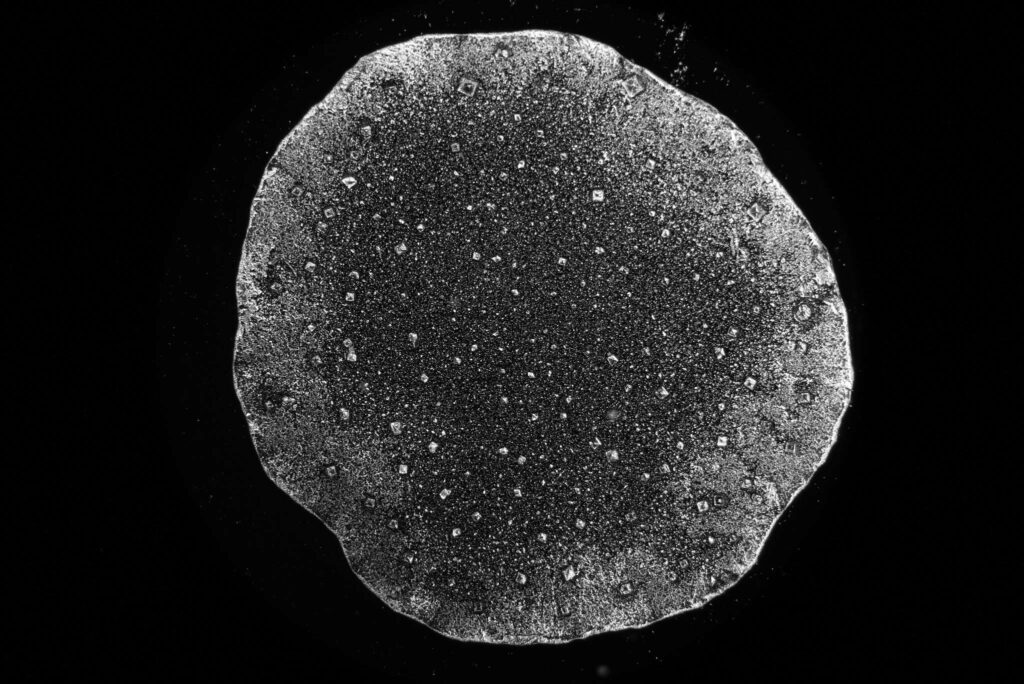
The “Permanent Cloud” offers three perspectives on the interconnectedness of water bodies in Vienna. Using maps, one can navigate through the layers of groundwater bodies and soils in Vienna and the source areas of the water supply system, and experience their connection to infrastructure, surface water, and tree cover. Precipitation is visualized in the form of a video projection of global atmospheric flows. Through microscopic photographs of local water samples from urban waterways, swimming pools, sewage treatment plants, etc., water is experienced as a “carrier of information,” and anthropogenic inputs are addressed.
Water-Privileged Vienna: Artistic Statement
Vienna’s water pipes supply exceptionally high-quality, delicious drinking water, of which the city is very proud. Blessed with a prime location on the edge of Alpine karst regions, the city planned its drinking water supply with great foresight in the 19th century and implemented it on a generous scale. Water-rich spring forests in Lower Austria and Styria were purchased, and the springs were tapped. Two high-altitude spring pipelines carry pure spring water over 150 and 180 km, respectively, to the city in an energy-neutral manner for two million residents. The water requires minimal treatment; currently, very little chlorine is used, and UV purification is sufficient.
The management of the spring forests is subject to strict regulations and is carried out in a manner that is very close to nature; the preservation of the soil layer and the biodiversity of the tree population, flora, and fauna are essential for the ecosystem services that produce pure spring water.
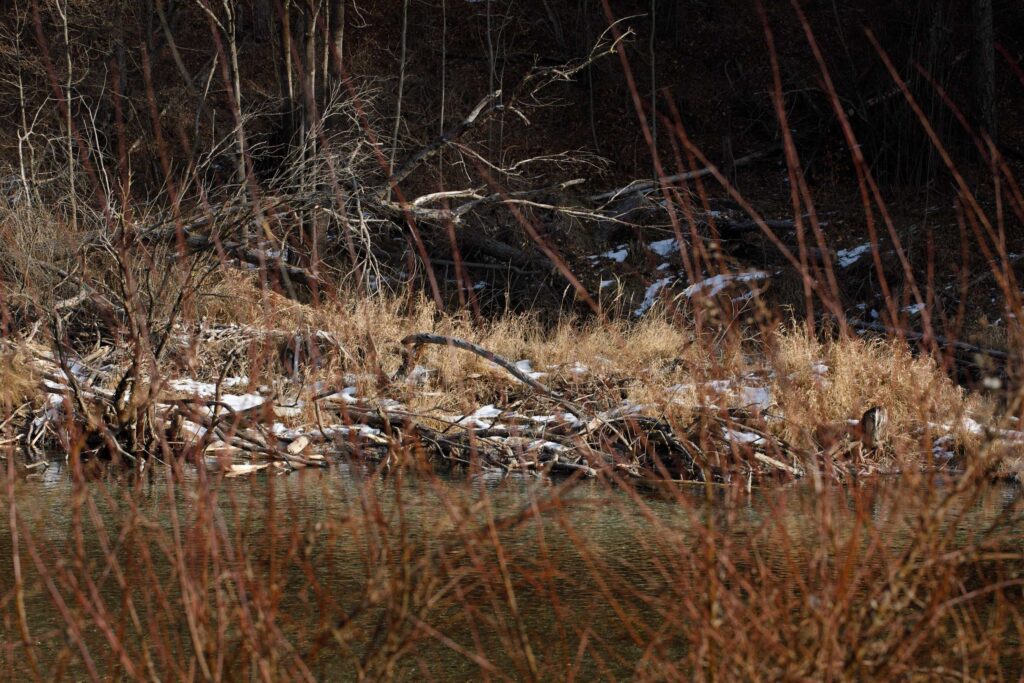
The ecologically exemplary management of forests and soils for optimal “water harvesting” inspires us to create a “Manifesto of Good Stewardship for Water.” The manifesto is based on the idea that water does not belong to any one place but is merely passing through, connecting places and communities. Every entity is a steward on this journey—whether forest soil, urban infrastructure, or living beings. A regenerative, careful approach to water—slowing it down, storing it, and using it for life, cooling, and filtration/purification—is at the heart of the manifesto.
We bring the “Manifesto of Good Stewardship for Water” from the context of spring protection areas into the public space in Vienna through performance, thereby reflecting the current state of urban water bodies and the city’s climate. In particular, the context of Vienna’s floodplain landscape, the Lobau—whose groundwater is also used for the city’s drinking water supply—offers an opportunity to critically examine current political decisions through the lens of the manifesto.
Sponge Structures as a Central Theme
The sponge-like structures of soil, rock, and organic bodies provide the backdrop for an artistic exploration of cavities, porosity, absorbency, and the exchange of information between bodies.
The metaphor of the “sponge,” which is also used linguistically to describe processes of knowledge acquisition, is central to the project. Sponge materials are used both in the performance in public space (proclamation of the manifesto) and in the creation of the temporary fountain.
Using cellulose sponge material, which is employed in industry and commerce, we are creating a temporary sponge fountain that invites people in public spaces to familiarize themselves with the processes of water seepage, absorption, and slow release. These are processes that are rarely observed anymore on the city’s sealed surfaces, which drain water as quickly as possible, yet are essential for mitigating extreme weather and cooling the city.